
Your home,
run from within.

The Hikoden AC-1 is a small part that fits inside an air conditioner's indoor unit. Run every unit in the house from your phone, your computer, Home Assistant or an AI assistant, with no account and no cloud.
Coming soon. Not on sale yet.
Air conditioners by
A home where nobody hunts for the remote.
With an AC-1 inside, the air conditioner joins your home Wi-Fi. Living room, bedroom, every room: one screen in your hand. The small daily chores quietly go away.

Cool before you are home
Turn on the cooling a little before you arrive, and the room is already cool when you open the door. From outside the house you go through your own Home Assistant or similar.
Every air conditioner, one screen
Living room, bedroom, the children's room. No hunting for remotes: one unit at a time, or all of them together.

Just ask to cool the bedroom
Ask your AI assistant and it changes the bedroom unit's setting. The AC-1 takes the request on your home network.
See what each unit uses
The energy each air conditioner uses is recorded, so you can see which room used how much, with a rough cost beside it.

No account
No sign-up and no log-in. Join it to your home Wi-Fi and it works.
Your home's records stay home
Room temperatures, running history and what you changed are not sent to anyone's server.
Not at a maker's mercy
If an app or a cloud service changes or ends, control inside the house carries on. The same while the internet is down.
Compared with the maker's own adapter.
For air conditioners without built-in Wi-Fi, the makers offer an official adapter and their own app. Here is how the AC-1 differs.
| The maker's official Wi-Fi adapter The official adapter and the maker's app | Hikoden AC-1 As designed, in development | |
|---|---|---|
| Price | No: Expected to cost more than the AC-1 The adapter, plus fitting work; some units need two parts | Yes: ¥9,800 planned, tax included Shipping extra |
| Account | No: A maker account and log-in | Yes: None Join it to your home Wi-Fi |
| What you control it from | Partly: The maker's app | Yes: The tools you already have A browser, Home Assistant, an AI assistant. No app of its own |
| When the internet is down | No: The app needs the internet and the maker's servers | Yes: Control inside the house carries on |
| Home Assistant | No: Not mentioned in the maker's guidance | Yes: Built in, by design MQTT discovery and ESPHome, ready to use |
| AI agents | No: Not mentioned in the maker's guidance Control from AI agents such as Claude, ChatGPT or Gemini (MCP). Voice-assistant support differs by maker and goes through the maker's cloud | Yes: AI agents, directly (a built-in MCP server) From AI apps that speak MCP, such as Claude, ChatGPT and Gemini. A cloud AI reaching in from outside needs a relay set up at home |
| The smart home you already have | Partly: The maker's app, and HEMS controllers | Yes: Home Assistant, MQTT, ESPHome, a local web page Apple Home and Google Home through Matter are planned; not certified |
| Size and parts | Partly: Some units need an extra board or a separate gateway besides the adapter | Yes: One small device, inside the indoor unit Case designed to about 40 × 25 × 12 mm (in design) |
| Adding sensors | No: Not mentioned for the official adapters | Yes: A port for extra sensors Designed so humidity, CO2 or presence sensors can be added later. No sensor is included |
| Software | No: Not published | Yes: To be published as open source Anyone can read it and change it |
The maker side is based on the makers' published documents and retailers' listings, and says only what holds for every maker listed (checked 27 November 2026). Each maker's comparison, with sources, is on its maker page. The AC-1 side describes the design in development and can change before release.

Designed in Japan, the size of your palm.
The AC-1 is designed for Japanese homes and the air conditioners sold in Japan. It sits inside the indoor unit, out of sight.
Designed in Japan, supported in Japanese
The design and the model checks are done in Japan. Questions are answered from Japan, in Japanese or English.
Reinforced isolation, for safety
The design keeps the inside of the air conditioner and the AC-1's network side apart with reinforced electrical isolation.
Nothing hidden
The software that runs it will be published as open source. Anyone can check it, and you can change it yourself after you buy.
Through the year, the ordinary way.
Each is an example of what an air conditioner with an AC-1 can do. To run it at set times or on conditions, you use Home Assistant or similar.

Spring: Just right before you wake.
Spring mornings swing between cold and warm. Have the room at the right temperature thirty minutes before you get up.
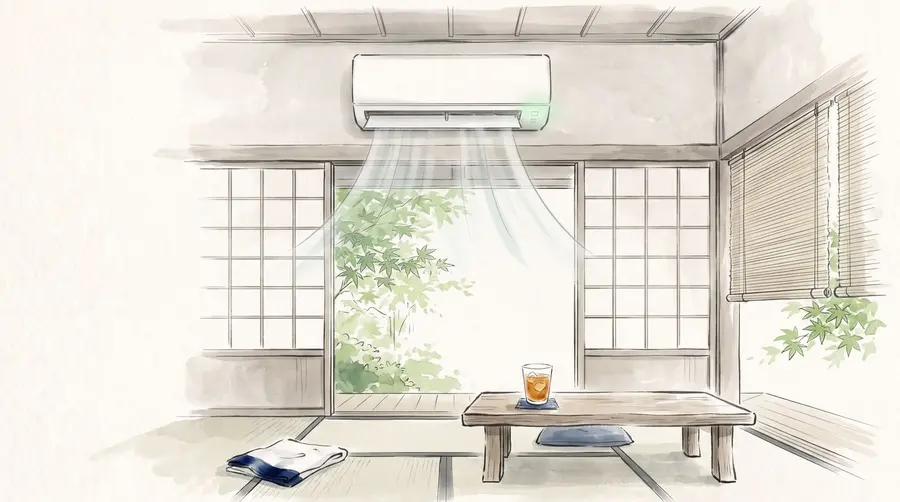
Summer: Cool before you are home.
Turn on the cooling as you near the house. Decide it once and it happens every day.
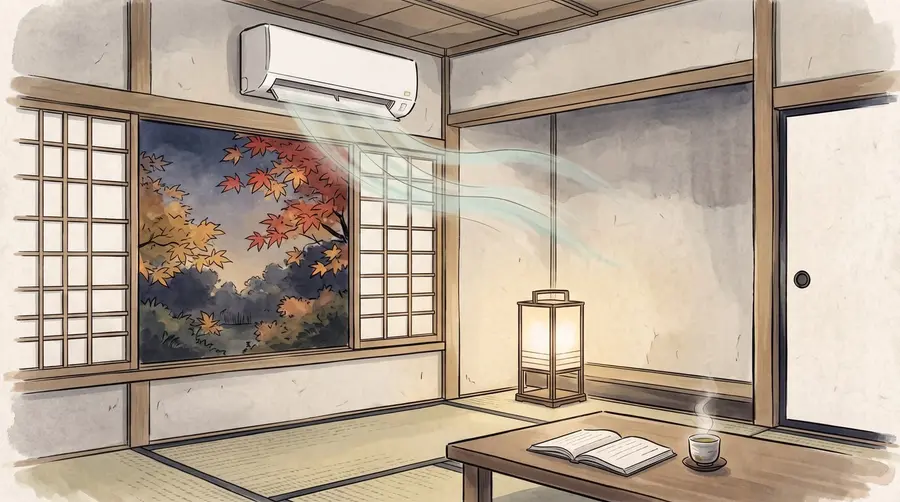
Autumn: See how you use electricity.
Which room used how much over the summer? Look back through each unit's energy.
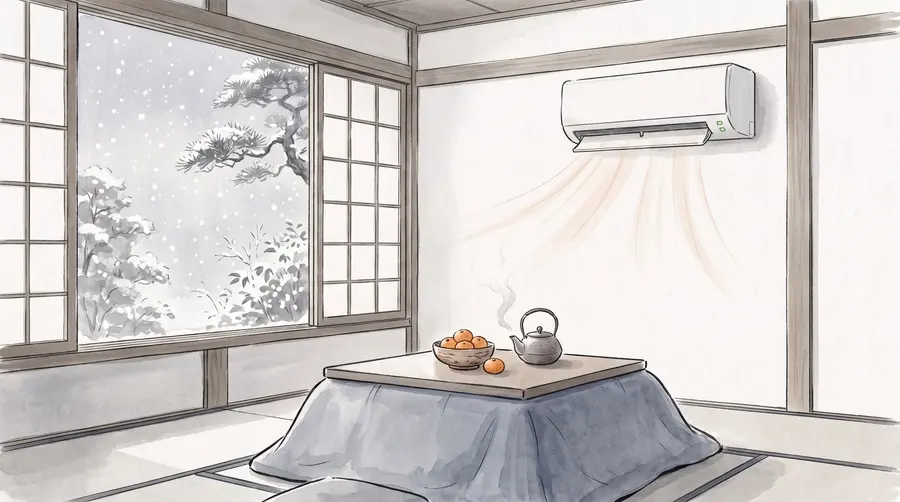
Winter: Just say it is a little cold.
Tell your AI assistant and it raises the living room's set point a little.


Small home devices, called by model number.
The AC-1 comes first. The PM-1 power monitor and the ES-1 environment sensor follow.

We will write when it is ready.
We will email you when the AC-1 can be ordered. Your unit's model number helps us decide which units to check first.
You are on the list.
We will email you when the AC-1 can be ordered.
Check your inbox.
We have sent you an email with a link. Open it to confirm your address; until then you are not on the list.
Questions
Can I buy it now?
Not yet. The AC-1 is in development. The planned price is ¥9,800 including tax, plus shipping. The date will be announced when it is set. Join the waitlist and we will write when it can be ordered.
Which makers' air conditioners does it work with?
For the first maker, a prototype is being built for wall units without built-in Wi-Fi. A second maker is in development and cannot be connected yet. Each maker's status and the models it covers are on Makers.
Will the maker's app still work?
No. The AC-1 takes the place of the maker's own wireless adapter, so the maker's app no longer sees the unit. Your usual remote keeps working as before.
Has it been tried on a real air conditioner?
Not yet. The software works end to end against a stand-in for the air conditioner. The next step is to connect a prototype to a real unit.
Is Hikoden part of an air-conditioner maker?
No. Hikoden is an independent brand, not affiliated with or endorsed by any air-conditioner maker.